

Have got and has got: A guide to usage and grammar

“I have got a surprise for you.”
Is there a difference between saying ‘I have a car’ and ‘I’ve got a car’? While they often mean the same thing, using ‘have got‘ incorrectly can make your English sound stiff or out of place. This guide breaks down exactly how to use these phrases like a native speaker.
How to use have got and has got
The choice between “have” and “has” depends entirely on the subject of your sentence. We use these phrases primarily to describe possession, physical traits, or temporary states.
If you’re serious about mastering these rules, the English Grammar in Use by Raymond Murphy is widely considered the best self-study book for intermediate learners. It features simple, one-page explanations of ‘have got’ vs ‘have’ followed by practice exercises.
Basic conjugation
| Subject pronoun | Form | Contraction | Example |
| I, You, We, They | Have got | I’ve got | They’ve got a meeting at 3:00. |
| He, She, It | Has got | She’s got | It’s got a broken wheel. |
When to use these phrases
While “have got” is essentially an informal version of “have,” it is most effective in three specific scenarios:
1. Possession and ownership
Native speakers almost always use ‘have got’ for physical items they own right now.
- Example: “I’ve got a surprise for you.”
- Formal alternative: “I have a surprise for you.”
2. Physical characteristics
Use this to describe how people, animals, or objects look.
- Example: “She’s got blue eyes and blonde hair.”
- Formal alternative: “She has blue eyes.”
3. Current states or illnesses
This is often used for temporary conditions like headaches or problems.
- Example: “We’ve got a bit of a problem with the printer.”
- Example: “I’ve got a terrible cold.”
Key differences: British vs. American English
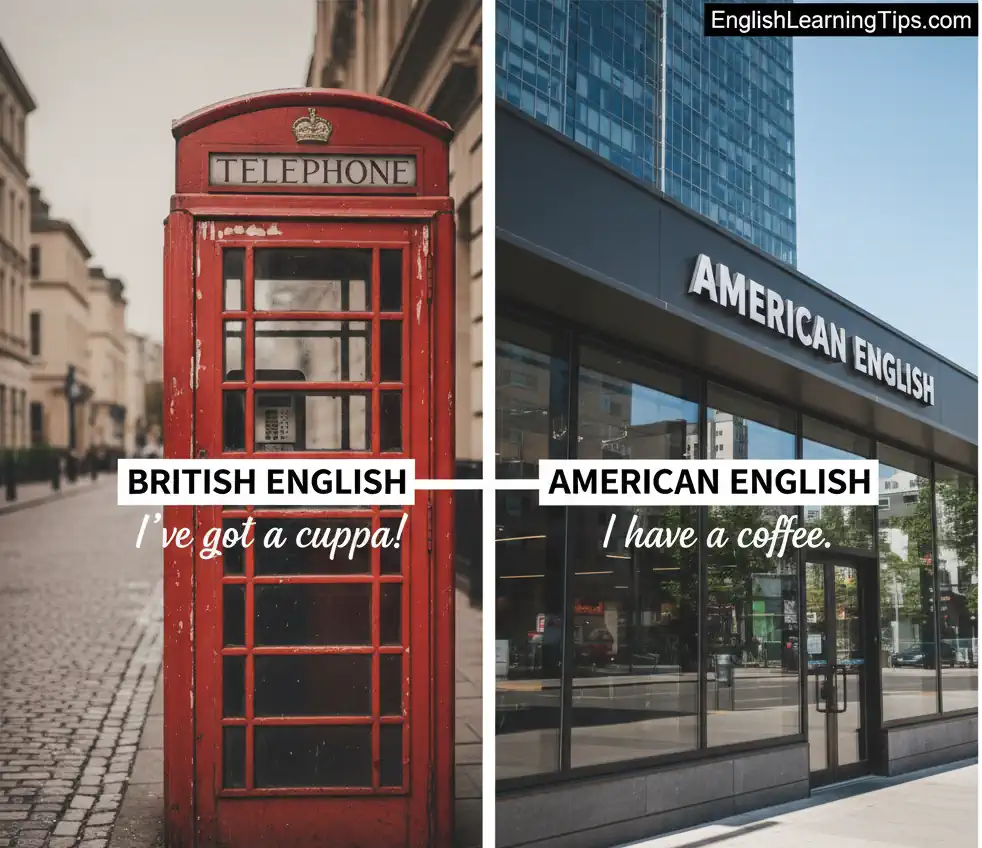
In the U.S., ‘have got’ is seen as very informal or used for extra emphasis. According to the Cambridge Dictionary grammar guide, ‘have’ is more common in American English, whereas ‘have got’ is the standard for informal British speech.
- British English: “Have got” is incredibly common and used in both spoken and some written contexts.
- American English: Speakers often prefer the simple “have” (e.g., “I have a car” instead of “I’ve got a car”). In the U.S., “have got” is seen as very informal or used for extra emphasis.
If you’re watching a British TV show, you’ll hear ‘have got’ constantly. In a Hollywood movie, it’s much rarer. If you’re unsure which to use in a professional setting, stick to the simple ‘have’—it’s never wrong.
Note: “Have got” is strictly for the present tense. If you are talking about the past, do not use “had got.” Instead, use the simple past: “had.”
- Correct: “I had a bike when I was a kid.”
- Incorrect: “I had got a bike when I was a kid.”
Frequently asked questions about have got and has got
Video: Got, have, have got, have gotten
Summary of examples
- Possession: “They’ve got a new house in the suburbs.”
- Relationship: “I’ve got two sisters.”
- Requirement: “I’ve got to go now” (Informal version of “I have to”).
- Illness: “He’s got a stomach ache.”
Mastering your English: Final thoughts
Whether you are using “have got” to sound more natural in a London pub or sticking with the classic “have” in a New York boardroom, the key is consistency. Remember that while “have got” is perfect for casual conversation and expressing possession, the formal “have” is your best friend for professional writing.
The nuances between British and American English can be tricky, but once you master these basic structures, your spoken English will sound much more fluid and authentic.
Join the conversation: How do you say it?
We want to hear from you! Different parts of the world have unique ways of using these phrases.
- In your country, do people say “I’ve got” or “I have”?
- Have you ever been confused by a British or American speaker using these terms?
- Do you have a grammar question we didn’t cover?
Drop a comment below and let’s discuss! If you found this guide helpful, share it with a friend or a fellow English learner—it helps our community grow and keeps the lessons coming.
Discover more from English Learning Tips
Subscribe to get the latest posts sent to your email.


