

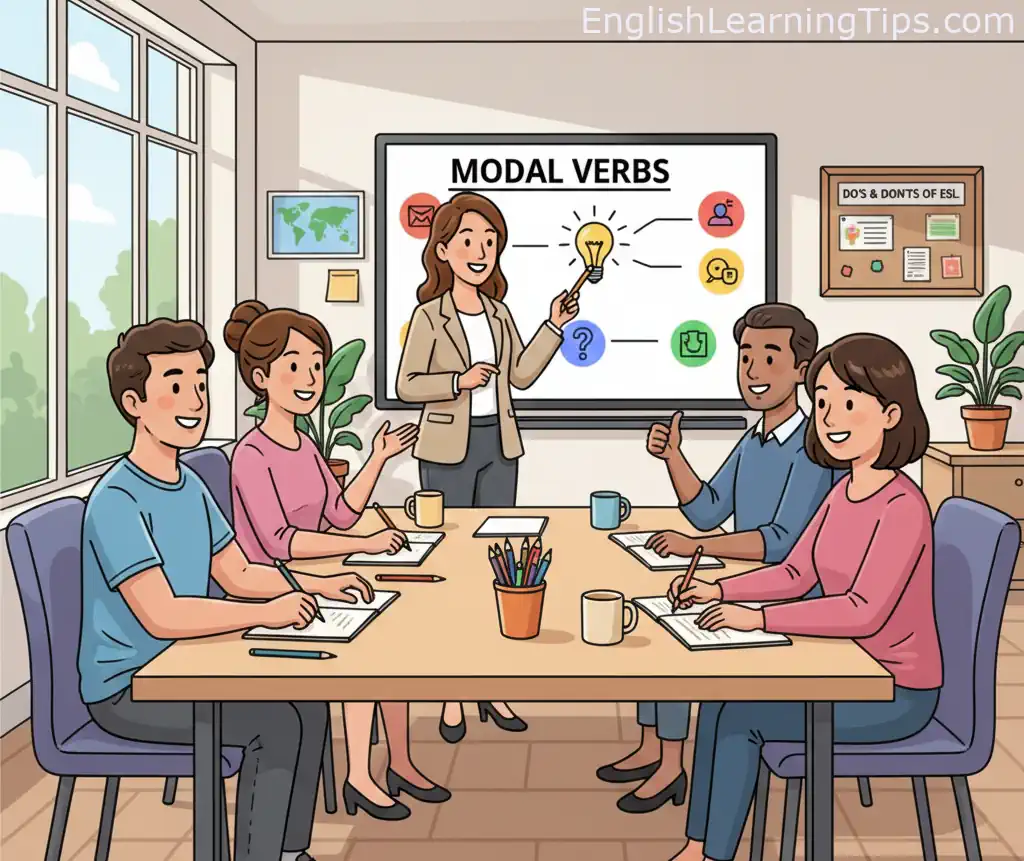
Master the classroom: The essential do’s and don’ts of teaching ESL

The demand for English teachers is at an all-time high. Whether you are teaching for business, travel, or personal growth, being an effective English as a Second Language (ESL) instructor requires more than just fluency. It demands a specific toolkit of ESL teaching strategies to navigate diverse cultural backgrounds and varied learning speeds.
This guide covers the exact strategies I use to keep students engaged and motivated. We’ll even briefly discuss the state of the 2026 ESL teacher job market.
Essential ESL teaching strategies at a glance
| Category | Do this | Avoid this |
| Communication | Speak clearly and use simple syntax. | Use complex idioms or speak too fast. |
| Instructions | Provide both verbal and written cues. | Give “information overload” with long explanations. |
| Technology | Use podcasts, videos, and AI as supplements. | Let gadgets become a distraction from speaking. |
| Student goals | Set SMART, collaborative goals. | Impose unrealistic expectations without student input. |
Don’t forget to check out the video resources section at the end.
Best practices for effective ESL instruction
Checking for understanding
Checking for comprehension is the backbone of a successful lesson. In my experience, silence usually doesn’t mean mastery—it often means the student is stuck in a translation loop. Instead of assuming they’ve got it, use Concept Checking Questions (CCQs).
- Do: Use non-verbal cues like thumbs up/down or ask for a quick one-word summary.
- Don’t: Simply ask, “Do you understand?” Most students will say “yes” to avoid embarrassment, even if they are lost.
Pursuing proper education and TEFL certification
While you can start teaching with just a degree, specialized training is a game-changer. Teaching children requires a completely different energy and methodology than teaching Business English to adults.
- Do: Invest in a TEFL or CELTA certification. Even experienced teachers benefit from learning specific ESL methodologies.
- Don’t: “Wing it.” Lack of preparation harms both your professional reputation and the student’s progress.
Giving clear instructions
Instructional quality directly impacts Student Talking Time (STT). If you spend ten minutes explaining an activity, the students lose time practicing.
- Do: Model the activity. Show, don’t just tell. Use the “Who, What, When, Where, Why” framework.
- Don’t: Use passive language or “Teacher Talk Time” (TTT) that confuses the learner. Be direct and concise.
Keeping language simple and accessible
For beginners, your goal is to be a clear bridge to the language, not a walking dictionary.
- Do: Keep sentences “short, sweet, and to the point.”
- Don’t: Use “fluff” words. For example, instead of saying, “We will be getting off work at 12 today, provided that we get this project finished,” say, “If we finish the project, we leave at 12.”
Optimizing your rate of speech
Your tempo should be a reflection of the student’s current level.
- Do: Speak at a pace that matches the learner. In group settings, find a balance that accommodates the median level of the class.
- Don’t: Speak at native speed with beginners, but don’t “baby” advanced students. They need to hear natural English to improve their listening skills.
Leveraging search engines and AI tools
The internet is a goldmine for ESL lesson plans and activity ideas. You can find a lot of ESL lessons on this site, from psychology to beginner lessons.
- Do: Use search engines to find specific niches, like “ESL lessons for medical professionals.” Use AI to generate prompts, but always fact-check the grammar.
- Don’t: Rely solely on peer groups for answers that a 30-second search could solve. Be a self-sufficient researcher.
Using visual aids and technology in the classroom
Visuals are a universal language. They reduce the cognitive load on students who are struggling to translate.
- Balance: Use a 50/50 mix of text and imagery.
- Contrast: Ensure your digital slides have high contrast and clean fonts.
- Relevance: Only use visuals that directly support the target vocabulary.
Using native languages and translators
There is a common myth that the “English-only” rule is the only way to learn. In reality, judicious use of the mother tongue (L1) can be a powerful tool. I speak multiple languages and understand a good bit of French and Italian. I utilize these skills all the time and use a translator when I need to. Students pay a lot for these classes, and saving time while helping them immediately understand a concept is priceless.
- Do: Allow occasional translation to save time on complex abstract concepts.
- Don’t: Let the translator become a crutch. If a student uses a translation app for every sentence, they aren’t learning to “think” in English.
The importance of “wait time”
Wait time is the silence between your question and the student’s response. While native speakers usually only need a second or two, ESL learners often need 3 to 10 seconds to process the grammar and find the vocabulary. This concept isn’t just useful in teaching language but in instruction as a whole.
- Do: Count to five in your head before prompting the student again.
- Don’t: Interrupt or finish their sentences. This increases student anxiety and stunts their linguistic growth.
In my own classes, I’ve found that counting to five silently gives the student enough ‘mental runway’ to translate their thoughts without feeling pressured.

The 2026 job market: A strategic pivot for native speakers
The Insight: While the global demand for English persists, the market has undergone a “Big Shift.” Entry-level wages in traditional ESL markets like North America, the UK, and Australia have dropped drastically in real terms compared to other graduate roles. Finding an online ESL job that “pays the bills” in these regions is significantly harder than it was five years ago.
Where the opportunities are now
The 2026 market is no longer a “one-size-fits-all” landscape. To earn a premium wage, you must look where the demand outstrips both AI automation and low-wage competition:
- The rise of the “specialist”: General English is being commodified by AI tutors. However, English for Specific Purposes (ESP)—like Medical English, Legal English, or Aviation English—is commanding a much higher premium over standard ESL rates.
- The “human-centric” premium: High-end academies in markets like South Korea, Vietnam, and Spain are paying more for teachers who can provide “cultural mentorship” and “soft skill coaching” rather than just grammar correction.
- Independent teacherpreneurship: Many veterans are leaving the “Big Tech” online platforms (where rates have stagnated at $10–$15/hr) to build their own private practices, often doubling their hourly rate by focusing on high-stakes exam prep (IELTS/TOEFL). While I have different rates for different regions, I typically charge between $20–$25 per 45-minute lesson for private students—a rate that remains sustainable. I do charge lower rates for some students in poorer countries.
Where to find real-time advice
- r/OnlineESLTeaching: Best for remote teaching news and company “red flags.”
- r/ESL_Teachers: A great spot for pedagogical support and lesson ideas.
- r/TEFL:The authority for traditional, brick-and-mortar jobs abroad.
Frequently asked questions about teaching ESL
Videos and resources to help you master teaching ESL students
20 ESL teaching methodologies
A comprehensive breakdown of the “how-to” behind different classroom styles.
How to teach beginners
Beginners are often the hardest for new teachers. This video provides a roadmap for those high-stress first lessons.
Teaching English without teaching English
In this TEDx talk, Roberto discusses a three-phase system designed to improve the student experience and professor practice by focusing on communication over rigid grammar.
Final thoughts on mastering the ESL classroom
Becoming an impactful educator is a journey of continuous adjustment. By implementing these ESL teaching strategies, you aren’t just delivering a lesson—you are giving your students the confidence to navigate a globalized world. Whether you are teaching English for business or helping a child learn their first phrases, your approachability and preparation are what make the difference.
Join the conversation
We want to hear from you! Every classroom is unique, and your experience can help a fellow teacher succeed.
- What is your go-to “icebreaker” for a new ESL class?
- Do you prefer using digital tools or physical props in your lessons?
Leave a comment below with your best teaching tips or any questions you have about starting your career. If you found these do’s and don’ts helpful, share this article with your teaching community or on LinkedIn to help other educators grow!
Discover more from English Learning Tips
Subscribe to get the latest posts sent to your email.


